
Almost 15 years ago my lab won a small grant from the Simons Foundation that took our work on memory in a new direction with a focus on autism. This was an area of deep personal interest and significance, but we didn’t yet have the preliminary data to compete for larger grants. From that discrete research project grew a whole new focus area for our lab, and one where we have been able to contribute significant discoveries related to the apparent male bias of autism.
In an era of shifting expectations in federal funding, thinking about our work in new ways that are relevant to foundations and family groups can open doors to fruitful and scientifically rewarding work. This is at the heart of our latest call for proposals for INI Accelerator Grants, which have always offered support for the early work needed to build a competitive grant application. Past Accelerator Grant Awardees have had success in building collaborative teams that went on to receive federal funding, several of which continue to be funded to this day.
This is our second year with a focus on diversifying our funding sources, and this year’s call asks for exactly the kind of pivot the Simons grant made possible for us: a new topic for the PI, aimed at a non-federal funder. Proposals should identify a specific foundation, nonprofit, or company and the funding program you plan to apply to. Awards of $25,000 support projects targeting applications of $150,000 to $299,999, and awards of $50,000 support targets of $300,000 or more. I am confident that broadening our thinking and aiming for new funding targets will not only enhance our science but will also increase our connections with the people most impacted by our work.
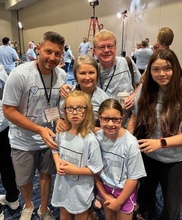
Getting out of the lab and interacting with families and individuals who live with the conditions we study every day is deeply meaningful and motivational. Stefan Strack, whose work has been funded for nearly a decade by Jordan’s Guardian Angels, notes that as a non-clinician, his only opportunities to interact with children living with the disorder are at conferences the organization hosts. Including his trainees and other lab members in those meetings brings renewed energy to the lab after every event.
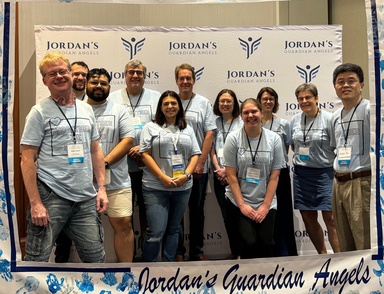
Stefan says trainees are especially energized by their pre-clinical work sparking a phase 2 clinical trial of Jordan’s Syndrome children treated with a repurposed drug.
I experienced something similar when I attended the 16p11.2 Genetic Foundation conference with Ben Kelvington and Jaekyoon Kim from my lab last fall. From that meeting, we brought home a concrete understanding of who will benefit from what we learn and how deeply it could impact their daily lives.
I am hopeful that the INI Accelerator Grants will lead to more opportunities to build these types of connections beyond the lab. I am looking forward to reviewing your creative proposals after the Nov. 20 application deadline.
Ted
October 2026